

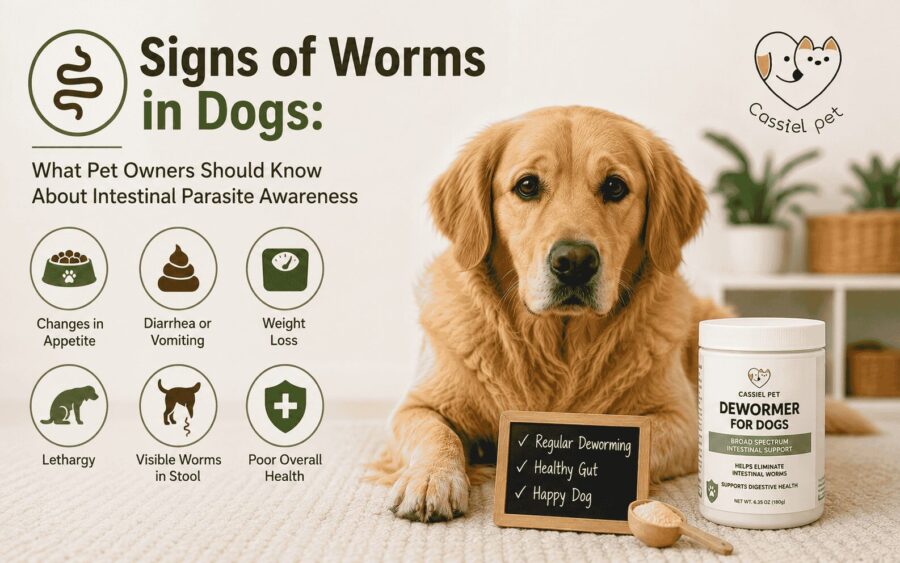
Article Summary: Intestinal parasites are a common concern among dog owners, especially in puppies, active outdoor dogs, and multi-pet households. However, many owners do not recognize the early signs that may suggest parasite exposure. This guide explains common signs of worms in dogs, why regular parasite awareness matters, how lifestyle affects exposure risks, and how responsible pet care routines can support better digestive health management.
Many dog owners think about parasite care only when they notice visible problems. However, intestinal parasites can be an important part of overall pet health awareness, especially for puppies, outdoor dogs, and households with multiple animals.
Understanding the common signs associated with worms and learning how exposure happens can help owners make more informed decisions about their dog’s everyday care routine.
Parasite awareness is not only about responding to problems. It is also about understanding risks, maintaining good hygiene habits, and supporting long-term pet wellness.
What Are Intestinal Parasites in Dogs?
Intestinal parasites are organisms that can live inside a dog’s digestive system. Different types of parasites may affect dogs in different ways depending on factors such as age, environment, lifestyle, and overall condition.
Common intestinal parasite categories discussed in pet care include:
- Roundworms
- Hookworms
- Whipworms
- Tapeworms
Because different parasites have different characteristics, understanding general parasite awareness is an important part of responsible dog ownership.
Common Signs of Worms in Dogs
The signs associated with intestinal parasites can vary between dogs. Some pets may show noticeable changes, while others may have fewer visible signs.
Possible signs owners may observe include:
- Changes in appetite
- Changes in stool appearance
- Digestive discomfort
- Weight changes
- Lower energy levels
- Changes in coat condition
These signs can also be associated with many other everyday health factors, which is why understanding the overall situation is important.
Why Puppies and Young Dogs Need Extra Attention
Puppies are often considered a group that requires additional parasite awareness because their immune systems and digestive systems are still developing.
Young dogs may encounter parasite exposure through different sources, including their environment and interactions with other animals.
For new puppy owners, learning about routine care, hygiene habits, and parasite prevention considerations is an important part of responsible pet ownership.
How Dogs Can Encounter Intestinal Parasites
Dogs can encounter parasite exposure through many everyday situations.
Common exposure sources may include:
- Outdoor environments
- Contact with contaminated areas
- Interaction with other animals
- Accidental ingestion of contaminated materials
- Household environments shared with multiple pets
Because dogs naturally explore their surroundings through smell and behavior, awareness of environmental factors is an important part of pet care.
Multi-Pet Households and Parasite Awareness
Families with multiple pets often need to consider parasite care from a household perspective.
Dogs and cats may share:
- Living spaces
- Sleeping areas
- Outdoor environments
- Daily routines
A complete parasite awareness approach considers every pet in the household rather than focusing only on one animal.
Why Regular Parasite Care Habits Matter
Many pet owners wait until they notice visible signs before thinking about parasite management. However, consistent care habits can help owners stay aware of potential risks.
Responsible parasite care habits may include:
- Maintaining good hygiene
- Monitoring changes in behavior
- Understanding outdoor exposure
- Following appropriate care schedules
- Using suitable pet care products
The goal is creating a routine that supports overall pet wellness rather than reacting only after concerns appear.
Choosing Parasite Care Products for Dogs
When selecting parasite care products, owners should consider more than simply the product name or marketing message.
Important factors include:
- Clear ingredient information
- Suitable formulation for pets
- Appropriate usage guidance
- Transparent product information
- Quality-focused manufacturing practices
Pet owners looking for broader information about parasite care options can explore dewormers for dogs and cats to better understand different approaches to internal parasite management.
Natural Approaches and Everyday Parasite Support
Some pet owners are also interested in natural ingredient-based options as part of their overall pet wellness routine.
When considering these products, owners should focus on:
- Ingredient transparency
- Product purpose
- Suitable usage information
- Compatibility with their pet’s needs
Understanding what ingredients are included and why they are used helps owners make more informed choices.
When Professional Guidance May Be Needed
While learning about parasite awareness is valuable, owners should seek professional guidance when they notice significant or persistent changes in their pet.
Additional support may be appropriate when dogs experience:
- Persistent digestive changes
- Significant behavior changes
- Unexplained weight changes
- Ongoing discomfort
Final Thoughts
Understanding the signs of worms in dogs is an important part of responsible pet ownership. Parasite awareness allows owners to recognize possible concerns, understand exposure risks, and create better everyday care routines.
By combining good hygiene habits, regular observation, and informed product choices, pet parents can support healthier lifestyles for their dogs.
About the Author